
In Saint Lucia, driving often means dealing with steep hills, winding roads, sharp bends and sudden changes in traffic conditions. These challenges make a properly maintained braking system essential for every motorist. While drivers usually pay attention to brake pads and tyres, one important component is sometimes overlooked: brake fluid. This hydraulic liquid plays a vital role in transferring the force from your foot to the brakes, helping your vehicle slow down and stop when necessary.
What Is Brake Fluid and Why Does It Matter?
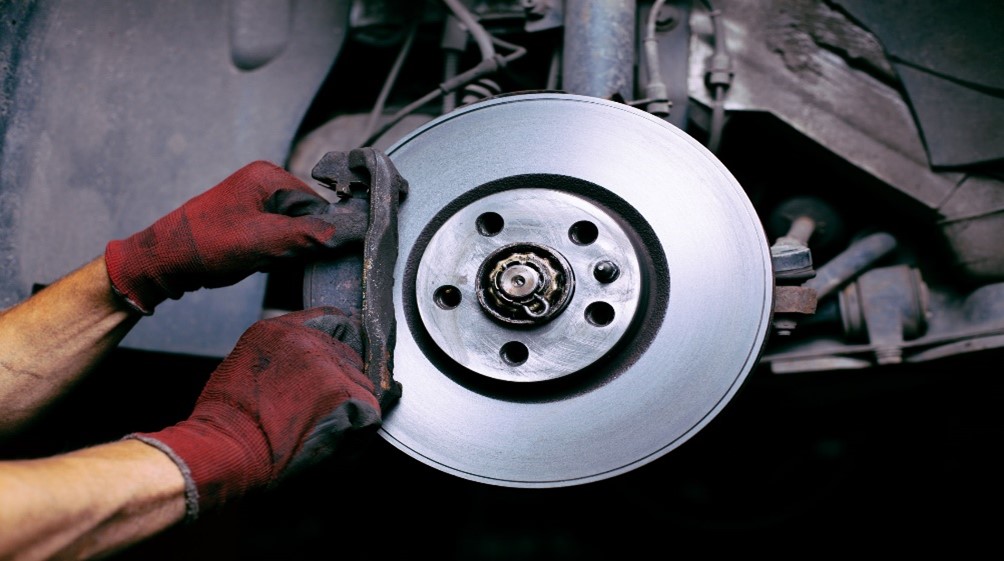
The brake fluid is a specially formulated hydraulic liquid that transfers pressure through the braking system. When you press the brake pedal, the master cylinder creates hydraulic pressure, which travels through brake lines to activate the braking components at each wheel.
Unlike engine oil, brake fluid does not primarily lubricate moving engine parts. Its main purpose is to transmit pressure reliably, even when the braking system reaches high temperatures.
Without the correct fluid, your vehicle may experience reduced braking performance. This is particularly concerning when travelling downhill, carrying passengers or driving through areas where frequent braking is necessary.
In a place like Saint Lucia, where routes can include long descents and tight corners, maintaining the braking system should be part of every driver's regular vehicle-care routine.
Why Does Brake Fluid Need to Be Replaced?
One of the most important characteristics of many common brake fluids is that they are hygroscopic, meaning they absorb moisture over time. DOT 3, DOT 4 and DOT 5.1 fluids belong to this category.
Even when the braking system appears sealed, small amounts of moisture can gradually enter through hoses, seals and the reservoir. As water content increases, the fluid's boiling point decreases.
Why is this a problem? During heavy braking, temperatures inside the braking system can become extremely high. If contaminated fluid reaches its boiling point, vapour bubbles may form inside the hydraulic lines. Unlike liquid, vapour can be compressed, making it harder for the system to transmit braking pressure.
The driver may notice a soft or spongy pedal, reduced braking response or, in severe circumstances, a significant loss of braking effectiveness. Moisture can also contribute to internal corrosion and damage to hydraulic components.
DOT 3, DOT 4 and DOT 5.1: What's the Difference?
Not all brake fluids have the same specifications. The DOT classification identifies different performance requirements, including boiling point and viscosity.
-
DOT 3: Commonly used in older and certain conventional braking systems. Its minimum dry boiling point is 205°C, while its minimum wet boiling point is 140°C.
-
DOT 4: Offers higher minimum boiling-point requirements, with 230°C dry and 155°C wet. It is widely used in modern vehicles.
-
DOT 5.1: A glycol-based fluid with higher minimum boiling-point requirements: 260°C dry and 180°C wet. It is designed for compatible braking systems that require this specification.
-
DOT 5: This is a different, silicone-based fluid. It should not be confused with DOT 5.1, and it is not interchangeable with ordinary glycol-based fluids.
The important point is that choosing a fluid simply because it has a higher DOT number is not always the right decision. Always check the owner's manual or the specification printed on the reservoir cap. Using an incompatible product can cause problems with seals and braking components.
How Often Should You Change Brake Fluid?
Many vehicle manufacturers recommend replacing brake fluid every two years, although the exact interval depends on the vehicle, its braking system and the manufacturer's maintenance schedule.
For drivers in Saint Lucia, regular checks are particularly worthwhile because demanding road conditions can involve repeated braking, especially on steep routes. However, the replacement interval should not be determined by road conditions alone.
A professional mechanic can test the fluid's condition and, where appropriate, measure its moisture content or boiling point. This provides a better indication of its condition than simply looking at its colour.
It is also important to remember that opening a bottle exposes the fluid to moisture. Once opened, it should be handled carefully and stored according to the manufacturer's instructions. A container that has been left open or poorly sealed should not be treated as fresh fluid.
Warning Signs That Your Brake Fluid Needs Attention
Although brake fluid deterioration is not always easy to detect from the driver's seat, certain symptoms deserve immediate attention:
-
A soft or spongy brake pedal: This may indicate moisture contamination, air in the hydraulic system or another braking-system fault.
-
A brake warning light: This can indicate low fluid level or a problem detected by the vehicle's braking system.
-
A falling fluid level: This may be associated with worn brake pads, but it can also indicate a leak.
-
Visible fluid around the wheels: A leak from a caliper, wheel cylinder or brake line requires urgent inspection.
-
Reduced braking performance: Any unexpected change in stopping ability should be treated seriously.
If the pedal suddenly becomes soft, the brake warning light appears or braking performance deteriorates, do not continue driving as though nothing has happened. Have the vehicle inspected safely by a qualified mechanic. Never rely on simply topping up the reservoir to solve an unexplained loss of fluid.
Practical Brake Fluid Maintenance Tips for Saint Lucia Drivers
Good brake maintenance starts with a few simple habits. Check the fluid reservoir periodically, but only when the vehicle is parked safely and following the manufacturer's instructions. The level should normally remain between the MIN and MAX markings.
Do not use colour alone to decide whether the fluid is still good. Although fresh fluid is generally clear to amber depending on its formulation, appearance cannot reliably establish its moisture content or boiling point.
When replacing the fluid, a mechanic should use the correct specification and follow the vehicle manufacturer's bleeding procedure. Modern vehicles equipped with ABS or electronic stability systems may require diagnostic equipment to complete the process properly.
Brake fluid can also damage automotive paintwork and irritate the skin. It should be handled carefully, kept in its original container and disposed of responsibly rather than poured onto the ground or into drains.
A Small Maintenance Job That Can Make a Big Difference
The condition of your brake fluid directly affects how reliably your vehicle responds when you press the pedal. Although it is easy to overlook, replacing it at the recommended interval and checking the braking system regularly can help prevent expensive repairs and dangerous situations.
For motorists in Saint Lucia, where steep roads and winding routes are part of everyday driving, brake maintenance deserves particular attention. A vehicle may have a powerful engine, new tyres and modern safety features, but none of these can compensate for a braking system that is not working correctly.
For more automotive maintenance advice, driving tips and vehicle-related news, explore our Saint Lucia automotive blog, including articles about brake problems, tyre care and essential vehicle inspections.
When was the last time you had your brake fluid checked or replaced? Do you usually include it in your regular vehicle servicing, or wait until a warning sign appears? Share your experience in the comments and let us know which car maintenance topic you would like us to cover next.